Image Credits: Flickr
The Labour Government is implementing plans to change the law in order to lower the voting age from 18 to 16, planning to get this through in time for the next General Election, which will at the latest be in 2029. This is part of a package of electoral reform being introduced through the Elections Bill. This increase in the franchise would be the biggest change to the electorate since the move from 21 to 18 in 1969, with roughly 1.5 million more people possibly being able to vote, the exact number of which being dependent on other reforms such as to ID and voter registration.
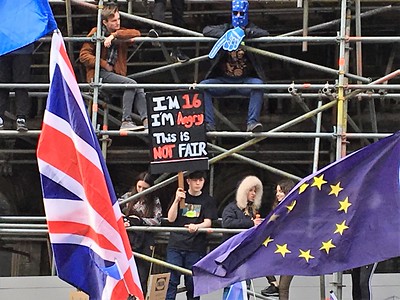
The main argument that Labour has made for this policy points to the valid argument of fairness, in that 16 and 17 year olds already have significant rights in this country, they can have sex, indeed have a family, go to work, and most notably pay taxes towards government spending. As such, it seems logical that they should be able to have a say in how politics occur, especially when that politics is using money taxed from them.
In fact, we can see the logic and application of such ideas in our very Union, with local and parliamentary elections in Scotland and Wales already allowing 16 and 17 year olds to vote, and seeing large benefits from doing so, especially in the public popularity of that decision among older generations, whose opinions of the increase in the franchise often start low and increase following the actual implementation of the policy.
Further to this, there is a large bevy of evidence as to the positive impact that a lowered age of enfranchisement can have on overall electoral turnout and political participation, especially among the youth. When 16 and 17 year olds are given the vote they are far more likely to keep voting, a sign that giving people the ability to vote straight after they have been learning about the political systems in school allows for a seamless transition that does not just lead to people not voting at their first election and then never voting again.
There are some who criticise the policy, and particularly the fact that it is Labour implementing this, by saying that it would benefit Labour because young people are more likely to vote left-wing, however this is not only a thoughtless argument against a democratic move, but is also factually flawed considering many young people, whilst they do vote left, are far more likely to vote for left-wing alternatives such as the Greens and Your Party
Alongside this, 16 and 17 year olds would at only represent about 3% of the electorate, and as such their ability to massively swing elections like some critics are crying is simply negligible; the only areas in which such changes may make a genuine difference in soon to occur elections are those where MPs have small majorities and thus the voting margins needed to decide what candidates win seats are smaller and thus more effective.
However, it would be highly unwise to just implement this policy with political education as it currently is, which is a as a mess, instead, in line with recommendations of the House of Commons Public Administration and Constitutional Affairs Committee, political education needs to be overhauled so that children in schools are given an appropriate level of understanding about how our political systems and our civil society work, without them having to undertake specific politics subjects or independent learning, though those avenues should still be appreciated for the depth and cultivation of independent political thought that they can bring.
Current ID and voter registration laws would also definitely need to be reformed with the younger generation in mind, especially ID laws which would need to consider those IDs that 16 and 17 year olds of all classes and backgrounds will be able to have, and which might finally lose the ageist bias that we saw in their implementation by the Tories under Boris Johnson. This would also serve as a driving force to finally implement automatic voter registration in this country, a basic reform that would prevent the disenfranchisement of so many and be nothing less than a remarkable good.
Overall, it cannot be denied that giving 16 and 17 year olds the vote will be nothing less than a win for democracy and the electoral legitimacy of the United Kingdom; by enfranchising our youth we will see far less of them driven from politics, preventing parties and politics from denying them the representation that has been denied from their age group for so very long. We will also through this see a reinvigoration of our political scene, whereby those people who are just educated and still questioning why things are how they are get to ask those questions to power and have their voices be given far more weight and maybe even finally be heard.