In their 2024 manifesto ‘Our Contract With You’, Nigel Farage’s Reform Party committed itself to leaving the European Convention on Human Rights in order to ‘tackle immigration’ if they were to win the next election, which now seems likely. According to a YouGov poll, heading into the Conservative Party conference Reform polled the highest of any party at 28%, followed by Labour on 20% and the Tories on 17%.
What would the logical response to such a situation be for the Conservatives? New ideas? New policies? It’s difficult to do that when as a party the Conservatives are completely intellectually bankrupt, sour at the fact that they were in power for fourteen years and have nothing to show for it.
Now would be the time to reinvigorate, create separation from the past and approach the next election from a new angle with new faces and pray that the public has a short memory, but by virtue of their very nature, the Conservatives are both reluctant to change and don’t know how.
Hence why it was announced on the 3rd of October that the Tories will be copying the homework of their main political rivals and also commit to leaving the ECHR if they win the next election, despite Kemi Badenoch during last year’s leadership contest arguing that doing so would not provide a solution to immigration.
Not only have they desperately adopted Reform’s xenophobic stance and been pulled further to the right, they have done so despite their leader being publicly opposed to such a policy. What does this tell us about the state of the traditional right in this country, and what does the eagerness with which the Tories bowed down to Farage’s agenda-setting mean for the next election?
First, some background is required. The European Convention on Human Rights (ECHR) is an international treaty established in 1950 under the auspices of the Council of Europe, an organization founded with the stated aim of promoting democracy, human rights and the rule of law across the continent. The Convention entered into force in 1953, and represented a historic commitment to protecting individual rights and preventing the recurrence of atrocities witnessed during World War II.
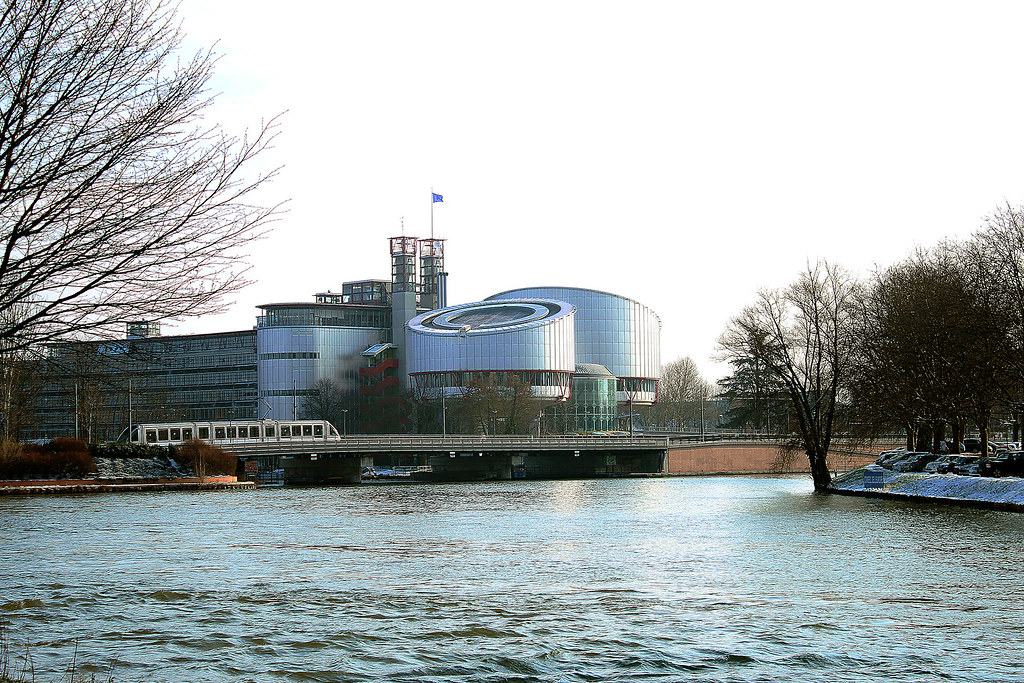
The ECHR sets out a comprehensive catalogue of civil and political rights that the forty-six member states of the Council of Europe are legally bound to respect. These rights are enforceable through a unique international judicial body, the European Court of Human Rights, based in Strasbourg. The Court provides individuals, groups and states the ability to bring complaints alleging violations of their rights under the Convention, once all domestic legal remedies have been exhausted.
The Convention’s core rights are enshrined in a series of articles. These include the right to life (Article 2), prohibition of torture and inhuman or degrading treatment (Article 3), prohibition of slavery and forced labour (Article 4), and the right to liberty and security (Article 5). The right to a fair trial (Article 6) and no punishment without law (Article 7) form the backbone of procedural justice under the Convention.
Other fundamental freedoms include respect for private and family life (Article 8), freedom of thought, conscience, and religion (Article 9), freedom of expression (Article 10), freedom of assembly and association (Article 11), and the right to marry and start a family (Article 12). The ECHR also prohibits discrimination (Article 14) in the enjoyment of the rights and freedoms it guarantees.
Over time, additional Protocols have expanded the Convention’s scope to include rights such as the protection of property, the right to education, free elections and the abolition of the death penalty.
When the Court finds that a state has violated the Convention, the state is legally obliged to comply with the judgment. Compliance is supervised by the Committee of Ministers of the Council of Europe, a body consisting of the Minister in charge of Foreign Affairs from each member country. For example, the UK’s representative in this committee is Yvette Cooper, the current Foreign Secretary.
At this point, you may be thinking where exactly does immigration come into this? The ECHR has no article specifically granting the right to immigrate or claim asylum, instead usually being invoked in cases where articles are at risk of being breached if an individual were to be deported. For example, a person may cite that if they were to be returned to their country of origin, they would face breaches of Article 2 (the right to life), Article 3 (prohibition of torture or degrading treatment), or Article 8 (respect for private and family life).
This is where the quite frankly despicable motivations of those advocating for the UK to leave the ECHR become clear. It is not an attempt to somehow empower the UK government in its dealings with immigration and asylum cases, as questionable as that may be, but rather an effort to make those in already incredibly precarious situations even more vulnerable.
Thus is the state of the right in the UK. The spectre of Farage hangs heavy over the Tories, once the epicentre of right-wing thought in this country, now relegated to playing a second-string role in a movement they essentially created. There is an arms-race of performative cruelty; actual policy and governance comes second to how vividly one can satiate the perceived grievances of a desperate working class by making life worse for the even more desperate.
Heading into the next general election, as far away as it may be, the question now is to what extent will the Conservatives be a pale imitation of the agenda being set forward by Reform. It reveals more than anything that the political ideology put forward by the Tories is thoroughly disingenuous, more about recapturing fleeing voters than actually governing the country.
And that is to say nothing about the proto-fascist agenda of Reform, and how their policies, half-baked as they are, represent an unprecedented attack on working people. They lure the disillusioned voters of other parties through lies and mistruths, and out of false contrition those parties tear themselves apart trying to win them back. The Conservative Party is dead, and they killed themselves.