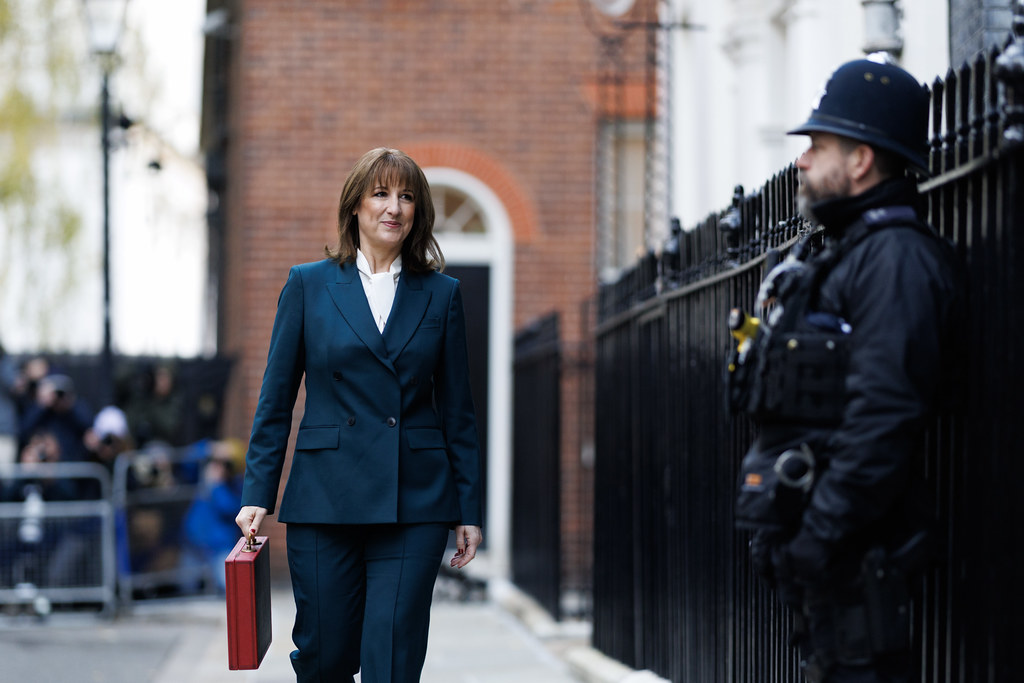
Pictured: Rachel Reeves
Image credits: Flickr
On the 26th of November 2025, Rachel Reeves, MP for Leeds West and Chancellor of the Exchequer, released the Labour government’s latest budget plan for the British economy. The budget has prompted backlash from all sides of the British political spectrum and has shown just how divided our country has become.
In this article I will aim to decipher what the budget is proposing, what this means for the working class and average Brits, how the media has portrayed the impact of the budget and finally: if the budget was a success or failure for the Labour government.
Perhaps the most positive thing to come from the budget is the scrapping of the two-child benefit cap. A 2022/2023 report showed that approximately 4.5 million children in the UK lived in relative poverty. This is 31% of British children. By lifting the benefit cap, 350,000 children will be lifted out of poverty overnight, and an additional 700,000 will have their level of poverty significantly reduced.
This decision marks a dramatic U-turn from Keir Starmer’s previous defiance over scrapping the policy during his election campaign. In 2023, he said it was a “tough decision,” but if elected, the Labour Party would not scrap the two-child benefit cap because it was both too expensive and unrealistic. This, seemingly, however, appears to no longer be the case.
Whilst some have argued that the lifting of the two-child cap is too little too late and “solving a failure that should not exist” in our advanced economy, it is still ultimately a small victory for the working class in Britain, particularly for the 44% of children in poverty who come from households with 3 or more children. Ultimately, after 16 months of “will-they-wont-they procrastination”, the Labour government has finally done what’s right.
Another small but positive outcome from Reeve’s budget is a new ‘mansion tax’. The charge will essentially aim to categorise homes over £2m into bands with properties valued in 2026 as between £2-2.5m paying a surcharge of £2,500 per year and up to £7,500 for houses valued at over £5m.
The barrage of coverage about this policy has been laughable. The tax will only raise £400m, however, it is still symbolically a step in the right direction towards a fair taxation of the wealthy in Britain. Despite this The Telegraph and other tory aligned publications have cried socialism and attempted (vapidly) to garner sympathy for the “asset-rich, cash-poor Britons” who are “trapped” in Reeve’s policy.
Despite these two seemingly positive policies, there is still much to be said about economic oversights, unfair targeting and inequality within the new budget.
Firstly, students have unfairly been hit again by Labour policy. From increasing student loans to £9,535 last year to the new freezing of loan repayments this year, the Labour government has once again ignored what students nationwide are calling out for: an affordable education. Now, students will have to start repaying their student loans quicker and in greater amounts, which, in a career landscape which actively ignores graduates and young people, feels both unusual and negligent.
Additionally, working people have been especially hit with new taxes. Personal taxes for example, will increase by £15 billion. Moreover, the freezing of National Insurance and income tax thresholds for an extra three years will target middle income workers whilst the labour government instead maintains the “lowest corporation tax rate in the G7”.
Despite the lifting of the two child-cap, people fundamentally are unhappy. As the Green Party have pointed out, Labour has failed to “tax extreme wealth and tackle the cost-of-living crisis”, with the budget instead choosing to “paper over the cracks”.
Whilst the Labour government has suggested that everyone must contribute – the Greens have pointed out that we should not be financially squeezing the working class more, but rather targeting the multimillionaires and billionaires who profit from our economic hardship
Alternatively, the right wing has also not been appeased by the budget. The Sun has repeatedly referred to the appeasement of “Benefits Street” in Reeve’s budget and has claimed it is unfair to tax working people whilst pouring money into welfare. Their anger at the taxation of working adults is not wrong but is profoundly misdirected. Whilst the right wing chooses to blame those who are on benefits, we should instead be looking at the mega-wealthy who have once again been given the green light to go undertaxed.
Ultimately, the new Labour budget was not all bad. That being said, it was far from a success. The lifting of the two-child benefit cap could not have come soon enough and without thinking too cynically about how this should have happened sooner – this is a win for working class families, children in poverty and the labour party.
However, this budget has indisputably shown that the need to start taxing the wealth and begin seriously redistributing wealth in this country has been ignored. Instead, the government has chosen to squeeze low-middle earners and students to fill gaps that could be filled by taxing the ultra-wealthy.
This budget is a small start, but unfortunately, it is certainly far from enough.