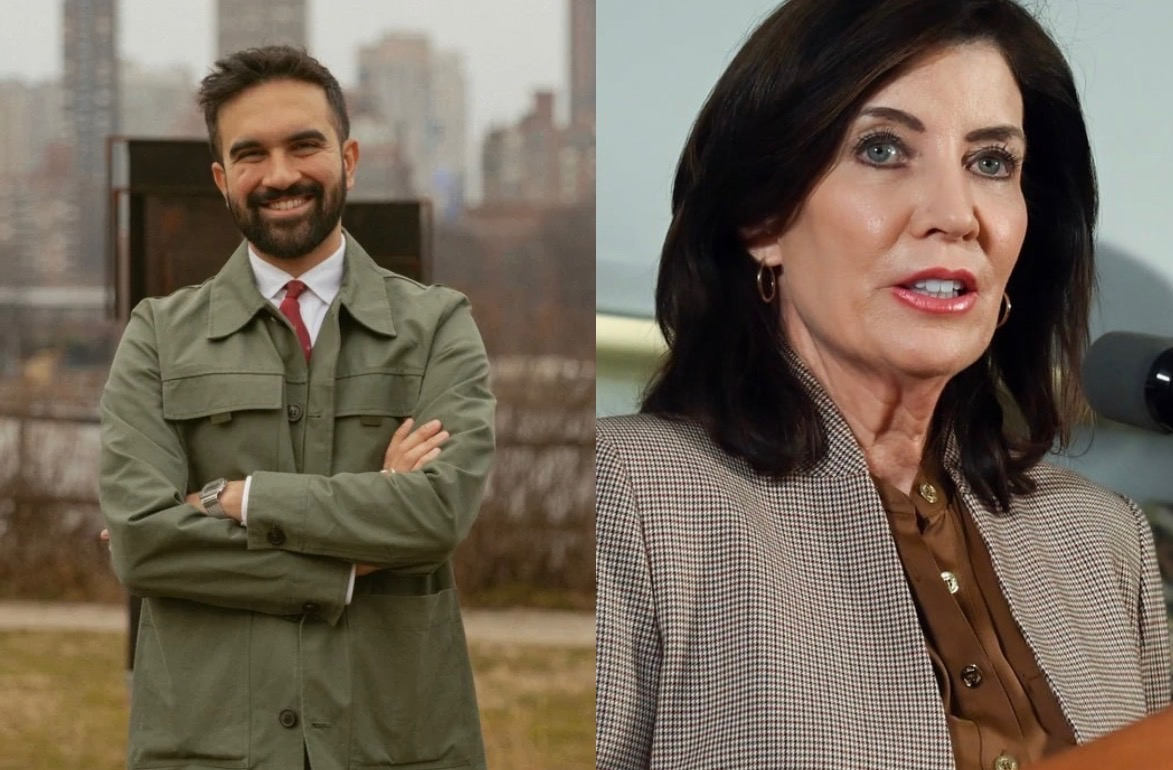
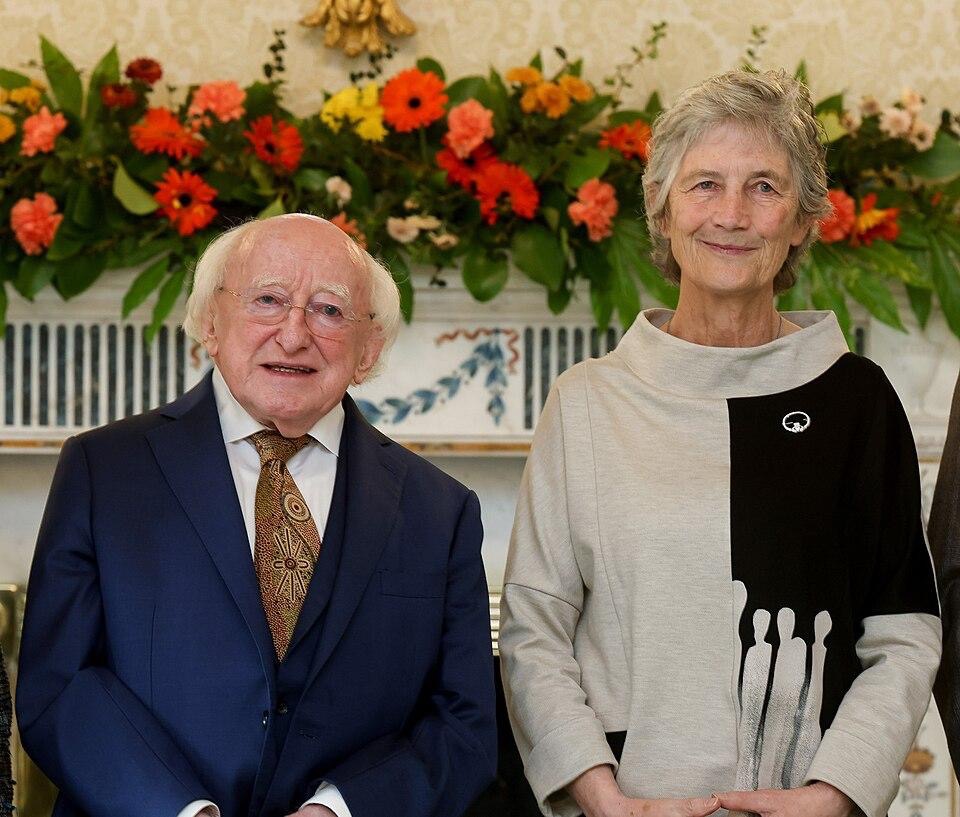
Pictured: Michael D. Higgins and Catherine Connolly
Image Credits: Wikimedia Commons
On Friday, 24th October 2025, the Irish presidential election took place to elect the person who will follow in the steps of the highly popular President Michael D. Higgins.
With 3 candidates on the ballot, the Independent candidate Catherine Connolly, Fine Gael’s Heather Humphreys, and Fianna Fáil’s Jim Gavin, the pool of candidates was one of the smallest in Irish history, and especially so after Jim Gavin dropped out a month before the election, yet remained on the ballot
Connolly won the election, securing 63.36% of the vote, the highest percentage ever received in a contested Irish presidential election. She also received the highest number of first-preference votes ever, giving her a clear victory over her opponents.
But who exactly is she?
Catherine Martina Ann Connolly is an independent left-wing politician. Born in Galway as the ninth child of fourteen, her childhood shaped her approach to politics, allowing her a greater ability to understand “the importance of listening to different voices” and forming her into a person with “a very high value on integrity and honesty”, things that seem refreshingly needed in our current politics.
She got into elected politics in 1999, serving as a Labour councillor in Galway for 17 years, with a one-year term as Mayor. She later left the Labour Party after they did not support her bid to run alongside President Higgins in the 2007 General Election, instead standing as an Independent and finally winning a seat in the Dáil in 2016.
During her tenure there, she became the first ever woman elected to chair debates through the post of Leas-Cheann Comhairle (Deputy Speaker) which she secured in 2020, where she managed to unite opposition parties against the government’s candidate, a feat she reproduced in her presidential bid, securing the support of Sinn Féin, the Social Democrats, People Before Profit and her own former party, Labour.
The numerical weirdness of this campaign was not the only eccentricity to the politics of this election, in fact the office of the Irish presidency is itself also politically eccentric; it stands as a mostly ceremonial position with very little power over policy, and as such the campaigns focused on personality and ethics, with both sides focusing on obscure ethical scandals relating to the other. However, this did not stop the campaigns from straying into policy issues, with views on areas from housing to military neutrality being discussed, but it was still personality that was central above all else.
Indeed, that is something perhaps epitomised by how one issue greatly influenced many voters, whether the candidates spoke the Irish language; with Connolly being a passionate Irish speaker whilst Humphreys is not, and has indeed been widely critiqued online for the sham attempts she made to imitate Irish language ability.
This election was also plagued, as many recent elections have been, by low voter turnout; turnout was estimated to be about 46%, reflecting widespread indifference, especially apparent considering many felt that the options did not reflect their politics, or that their preferred candidate had not been able to gain eligibility to get onto the ballot.
We can see this especially in how a record number of the electorate intentionally spoiled their vote, with 213,738 spoiled votes, or 12.9% of the total votes cast being spoiled in some way. However, because of the nature of spoiled ballots, in that they can be intentional or just come from mistakenly filling out a ballot, and the fact that the right-wing ran a campaign encouraging people to spoil their vote in support of their candidates who did not get enough nominations, it is impossible to tell exactly why and in what ways this actually came to occur.
Connolly’s victory is therefore something that has many meanings, but it clearly serves as an important message in two key ways; one of those is to the left, and the other to politics as a whole.
Firstly, Connolly was running against two strong candidates from Fine Gael and Fianna Fáil, the two ruling centre-right parties that have dominated Irish politics for a century, and whose odds for success should have been strengthened by the preferential voting system, but this did not occur. And that is perhaps because of how the usually fractious left managed to unite around Connolly, with the Social Democrats, People Before Profit, Labour and even Sinn Féin all managing to back one candidate; a candidate who it must be noted is socially far left and who believes in equality and ring-fencing Irish neutrality from what she calls western “militarism” and genocide enablement, something that is less radical in the socially-left wing Irish politics but which is still a crucial call to arms for the wider left-wing.
Secondly, due to the low turnout, this election is clearly a message to the establishment politicians of Ireland, a message of discontentment with the candidates they fielded, with the relative unimportance of the office of president, and with the process that surrounded the election and the candidate selection. This is a message that must also not be ignored, and perhaps especially also by the wider left-wing once again.
Even if we acknowledge the relatively low-importance of this election, and thus the lessened significance of its results, after all, despite the fact that voters elected the former President Higgens twice, who himself was an outspoken left wing figure, executive power still ended up being given to the centre-right parties, in successive coalitions, of either Fine Gael or Fianna Fáil, this election and its results are still an important sign for the left.
It is a sign that they can win, that there is an appetite for their voices and politics, and that the left must make sure to unite around popular left-wing figures, instead of fracturing and dividing around ideological lines that should not matter in the face of preventing the right and far-right.