https://www.digitalmusicnews.com/2025/11/10/rosalia-lux-spotify-single-day-album-record/ – image creds
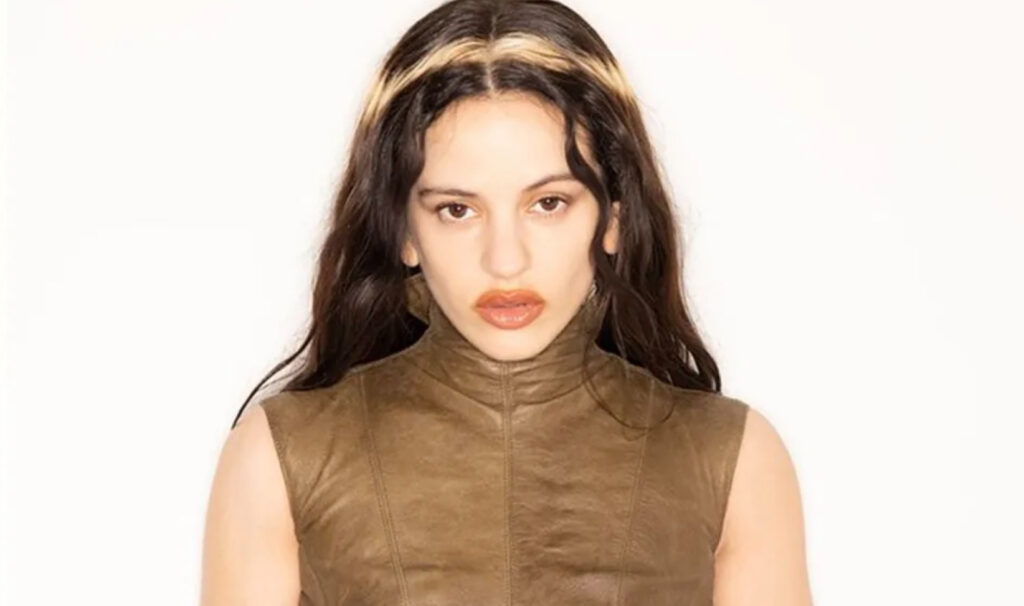
Catalan singer-songwriter Rosalia, first teased her fourth album LUX (Latin for ‘Light’) by spontaneously releasing the single Berghain, sung in German, Spanish and English, and with notable features from Bjork and Yves Tumor.
Upon its release, it became clear that Rosalia had taken a departure from the experimental techno and reggaeton-infused pop sound of her previous release MOTOMAMI (2022), blending orchestral and operatic sounds with lyrics regarding spirituality and obsession.
With the whole album accompanied by the London Symphony Orchestra, this song was just a segment of the journey that Rosalia takes audiences on within LUX, being a celebration of language, femininity, spirituality, and sexuality.
And, whilst ambitious, Rosalia executes this impeccably, creating what I would argue to be one of the most creative and innovative albums of the 21st century.
Recorded over 2 years, and sung in thirteen different languages, LUX follows a four-part narrative journey, each portion with a focus on different female saints, who are largely viewed as mystics and visionaries. Speaking to The Guardian, Rosalia exclaims “I’m tired of seeing people referencing celebrities, and celebrities referencing other celebrities” continuing to emphasise “I’m really much more excited about saints”.
Not only does Rosalia reject the unengaged and often static themes found within popular music, she looks to how ancient and medieval experiences of femininity, rage, and spirituality inform the disillusionment that many young people are grappling with in this day and age.
I mean, who else is taking inspiration from Saint Olga of Kyiv, a 10th century ruler of Kievan Rus’, in order to encapsulate the all-consuming feelings of rage and the visceral need to take revenge on those who have wronged you.
It’s a testament to her dedication as an artist the arduous time spent reading about these figures, I can say myself as a history student, and someone who has previously studied religion, that getting an accurate reading of 10th century mystics is no easy task. And, the fact that Rosalia has managed to capture their essence so carefully and authentically shows that creating meaningful and engaging art not only takes time, but is a process that is uniquely human.
Aside from the time taken to carefully research and read about hagiographic icons of the 10th century, Rosalia spent a year alone focusing purely on the translation of her lyrics into languages that corresponded to the saints she was inspired by.
In singing about warrior saint Joan of Arc in the song ‘Jeanne’, she sings “Et qui serai-je? C’était decide. La voix d’un ange s’est révélée” [“Who will it be? It was decided. The voice of an angel revealed itself”].
Furthermore, through selecting Joan of Arc as her inspiration, Rosalia manages to convey this spiritual and transcendent self-assurance, exploring the often written about themes of ‘fate’ and ‘destiny’ in a way that no mainstream is even attempting to do in the 21st century.
Whilst one may argue that in this day and age artificial intelligence would be the perfect tool to enhance this writing process, being arguably the quickest way to translate texts and research historical facts. One thing that AI will never be able to do is feel, which is something that comes through in every track on this album.
Whether you understand the lyrics or not, you can feel Rosalia’s emotion through her art.
In addition, through learning to sing in 13 languages, Rosalia showcases the importance of language diversity, and whether intentional or not, she highlights the importance of preserving language, especially those that are endangered.
In what is my personal standout on LUX, the twelfth track on the album titled ‘Focu ‘Ranni’ is sung in Sicilian, and traces the story of Saint Rosalia of Palermo. Predominantly known for her total devotion to God, retiring to eventually live as a hermit in a cave on Mount Pellegrino, she claimed to have been led there by two angels.
What is more pertinent however, is the decision to sing in Sicilian, a dialect which has been heavily suppressed in Italy, having been eroded over many years along with other regional dialects such as those in Veneto and Sardinia. By choosing to highlight the Sicilian dialect, Rosalia contributes to a growing movement to preserve these endangered languages.
Lyle Campbell highlights this importance, stating that “languages are treasure houses of information for history, literature, philosophy, art, and the wisdom and knowledge of humankind. Their stories, ideas, and words help us make sense of our own lives and of the world around us – of human experience, of the human condition in general.
When a language becomes dormant without documentation, we lose incalculable amounts of human knowledge”.
Therefore, the significance of Rosalia’s decision to sing in Sicilian cannot be denied, not only is it a beautifully written song about giving yourself over to the divine, it highlights the complexity and the history of the human language, something that once again is innately human.
Throughout this album Rosalia asks audiences to give themselves over to the sound and the emotion and story that LUX offers. She consistently shows that feeling and creativity transcend language, illustrating that art poured over and crafted by humans will always supersede the capabilities of artificial intelligence.
I for one, am certain, Rosalia could easily have created ChatGPT, but ChatGPT could never have created LUX (2025).