I Kissed A Girl and I Kissed A Boy have been cancelled by the BBC in a move criticised as a significant setback for LGBTQ+ representation on mainstream British TV.
Written by Haarisah Haq
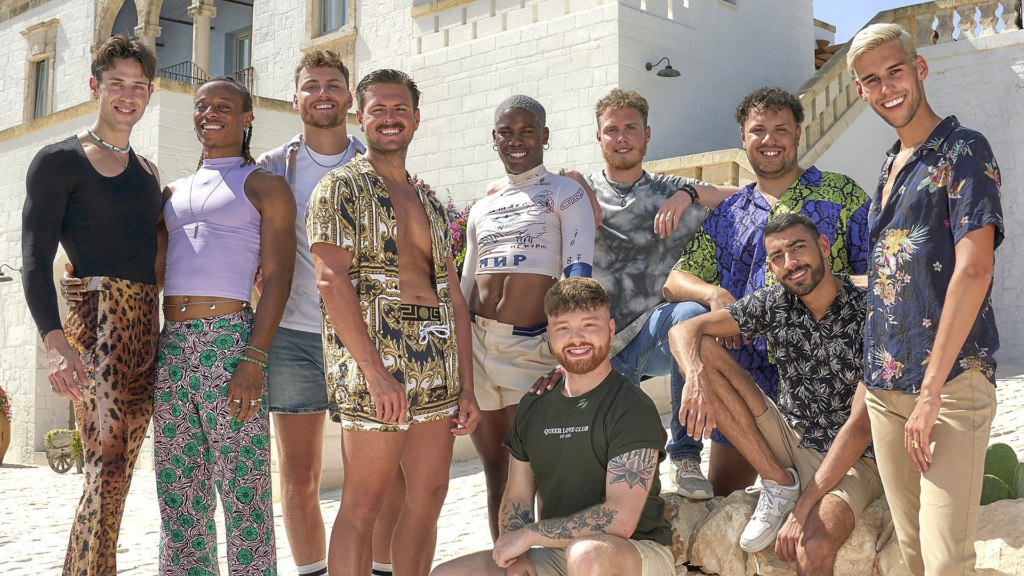
Image credits: BBC
Both reality dating TV shows, hosted by Dannii Minogue, had two seasons before their cancellation with the final season of I Kissed A Girl being set to air over the summer.
I Kissed A Boy first aired in 2023 on BBC Three, making history as the first gay UK dating show. I Kissed A Girl’s subsequent all-female cast aired in 2024. Both shows were heralded for starting important, and often previously unsaid, conversations about what is to be queer in the UK in the present day.
The show was unfortunately cancelled earlier this month, with a statement from a BBC spokesperson claiming they ‘have to make difficult choices in light of [their] funding challenges’with no plans for either show to return.
The premise of the shows was a refreshing change of pace, with so much of queer media being rooted in tragedy and profiting on suffering, I Kissed A Boy/Girl subverted this norm.
But what does this say about how queerness is both perceived and received in the UK? Its cancellation is a clear reflection of a much wider trend of LGBTQ+ media being expendable to mainstream broadcasters.
Jordan Burrow, a contestant on I Kissed a Boy’s second series, stated ‘it’s very much an example of where we’re at within the queer community and where we stand with people who are not in the community’.
Between March 2023 and March 2024, there were more than 18,000 recorded homophobic hate crimes in the UK, with hate crimes based on sexual orientation rising by 44%. These statistics are not to claim that LGBTQ+ people in the UK should be full of despair, but they do highlight an uncomfortable truth.
Queer representation in the media is important for validating identities and reducing societal prejudice. True and accurate representation can help challenge harmful stereotypes, thus contributing to changing public attitudes towards acceptance.
This cancellation is a clear loss of positive visibility, especially considering so few shows are willing to engage with and centre queer culture to the same extent I Kissed ABoy/Girl did.
The cancellation of LGBTQ+ inclusive tv shows is nothing new, it happens at a disproportionate rate to heteronormative ones, despite often having active audiences (like I Kissed A Girl/Boy did). This trend is also occuring simultaneously with the rise in anti-LGBTQ+ rhetoric.
As a public broadcaster, it can be argued the BBC has a duty to represent diverse audiences, especially given that the network is partially funded by the public through TV licence fees. So much of queer media is rooted in tragedy, choosing to profit on suffering over joy, only to abandon a project as expendable as soon as it seems unprofitable.
Often, queer representation is only truly embraced when it yields a profit fiscally and culturally, as soon as it does not? It becomes unnecessary.
Palatable narratives that have close proximities to the accepted social norms are favoured over more controversial media. Queer representation is created to fit mainstream expectations and shows such as I Kissed A Girl/Boy challenge this, reflecting realities as they truly are as opposed to what a softened version of them.
In recent years, there has been significant positive representations of queer people in the media, with many movies and tv shows having significant popularity within mainstream pop culture. However, it seems with every success, there is still a step backwards.
If the UK’s main broadcasting service refuses to facilitate series such as I Kissed a Girl/Boy, how can any other?