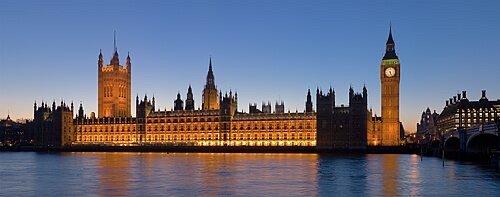
Image credit: Palace of Westminster, Wikimedia Commons
A teacher, a warehouse worker, and an MP walk into a bar. Only two of them are liable to criticism, apparently.
Newly elected Gorton and Denton MP Hannah Spencer has recently come under fire from MPs after exposing a drinking culture within Parliament. The Green MP questioned Keir Starmer on why MPs were turning up smelling of alcohol during Prime Minister’s Questions amidst a backdrop of jeers from MPs more offended by the criticism than the act itself.
Starmer’s response was characteristically evasive, choosing to ignore the question and instead accusing Zack Polanski of council tax dodging.
Spencer’s criticism goes against the grain in a Westminster culture that has been normalised to longer-serving politicians. To most, drinking in the workplace would be considered absurd, however, the outcry against her criticisms shows how out of touch establishment politicians are.
Standing out among career politician MPs, Hannah Spencer served as a tradesperson for over a decade and has thus been exposed to regular work etiquette prior to her Parliamentary one.
Newer MPs with a functioning work ethic aren’t the only group to be alienated by this systemic inequity however. Parliament having multiple bars stands to alienate teetotallers, such as those abstaining for religious or health purposes, from the networking and social aspects of government work.
Parliamentary bars have existed since 1773, carrying the legacy of an outdated social culture in which public and parliamentary life was imagined as a masculine space entirely separate from the home.
They became a refuge from domestic responsibilities, while women and carers were expected to organise life around those responsibilities. Of course, women are now in Parliament, but its bars preserve a version of politics built around these initial assumptions about public life and conservative traditions.
In protecting the leisure of the rich and powerful, parliamentary bars have become a symbol of how privilege disguises itself as custom.
A 2008 commission by the Association of Licensed Multiple Retailers found that MPs paid around one third of the national average price for certain alcoholic beverages. Further Freedom of Information requests have revealed subsidised catering for MPs costs millions annually.
A 2020 study has also shown that there is a correlation between MPs having “probable” mental health issues and alcohol consumption, and that of its recipients three-quarters of them were unaware of the free mental health services provided to MPs by the government.
If the drinking is for mental health purposes to cope with loneliness, stress, or being kept late at night to vote, then perhaps a more sensible solution than sending MPs staggering into Parliament, is to use this money to improve the availability of mental health services in government.
Indisputably, there is a need for a functioning democracy to be sober. If there is a drinking limit for one to operate dangerous machinery, or drive due to the danger and impact it can have on a human life, there needs to be similar for those voting on mechanisms that will inevitably affect millions of lives.
When MPs drink during parliamentary business, it signals that the political class are exempt from the general understanding of the impacts of alcohol on one’s ability to make decisions.
This double standard becomes even clearer when Parliament is compared with the workplaces MPs supposedly represent.
Non-politicians would not be granted the same generous interpretations of what is considered professional if they drank during a shift. This expands into other aspects of Parliament as well – in most workplaces, the childish jeering that Spencer received during her question would be grounds for a disciplinary.
However, in Westminster, it is excused as part of its inherited political tradition. Evidently, Parliament’s work environment is protected by a conservative tradition where typically unacceptable practices are preserved out of normalcy. Rather than mirroring contemporary workplace standards, Westminster often seems to operate as if professionalism and basic respect are optional constraints for the political class.
Alcohol in Parliament is not simply a problem of politeness either. In 2025, the parliamentary Strangers’ Bar was temporarily closed for a security review after an alleged spiking incident. This drinking culture, defended as tradition, has thus become a workplace safety issue for those also working in the parliamentary estate.
Ultimately, this reveals a fundamental hypocrisy at the highest level of British politics. The same institution that legislates on workplace conduct, public health, and employment rights, refuses to apply workplace expectations to itself.
MPs should be treated like workers with responsibilities. If Parliamentary hours and the public eye are too much to handle, the answer should be better mental health support, not a publicly funded drinking culture. Far from being radical, a sober democracy should be the bare minimum expected of those we trust to make decisions for the country.