Image Credits: Wikimedia Commons
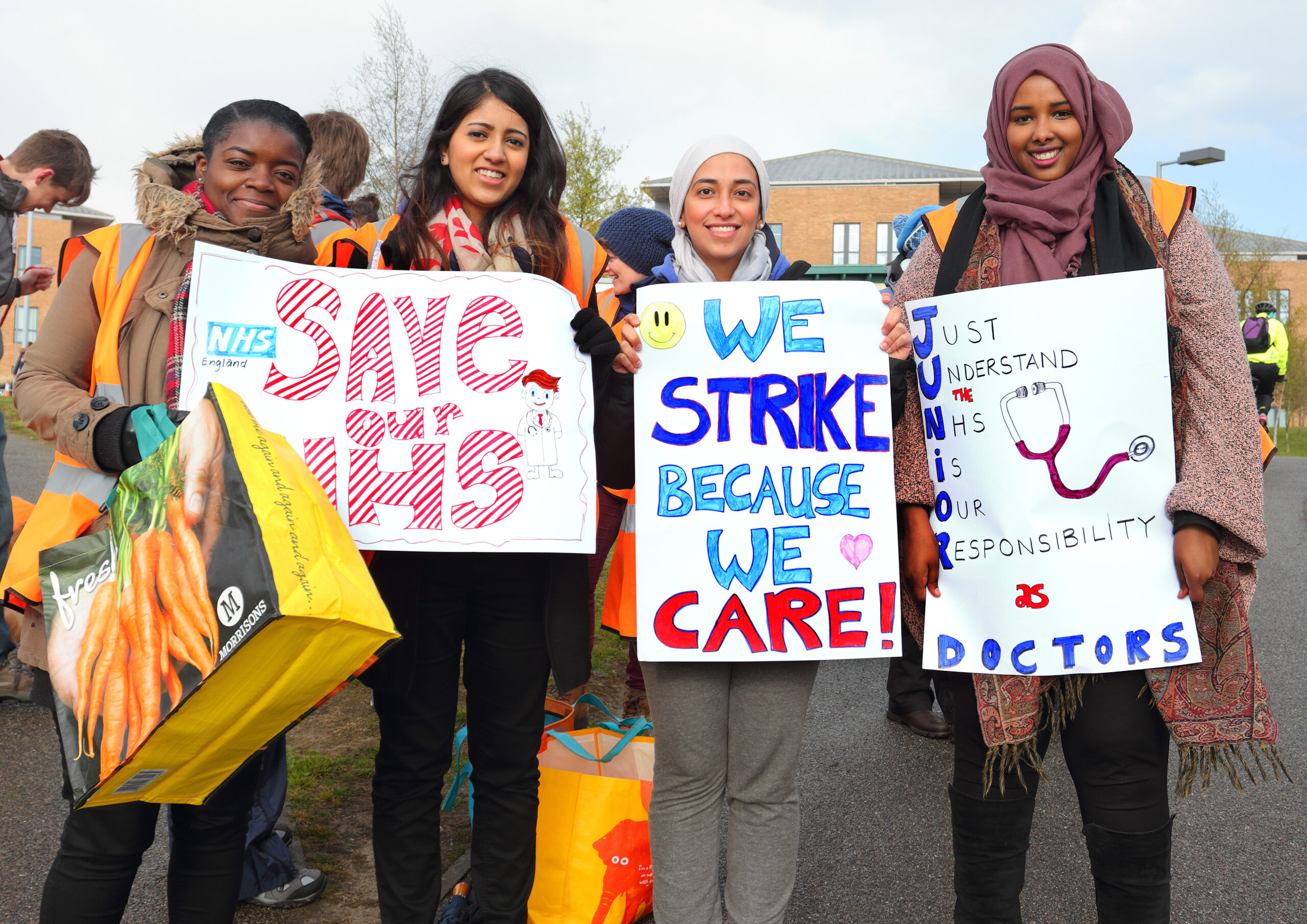
Following yet more disputes with the Department of Health and Social Care (DHSC) over increased pay for resident doctors in the UK, the British Medical Association (BMA) has announced yet more strikes to protest against unsatisfactory pay and working conditions since 2023. NHS bosses have described the strikes (which will take place across five days, beginning on the 17th December) as an ‘inflammatory act’ by the BMA, and Health Secretary Wes Streeting has labelled them ‘a cynical attempt to wreck Christmas’.
While NHS bosses are urging both sides to get round the table to resolve the issue, their description of the strikes as ‘inflammatory’ and is ill-advised and antagonistic. Such language will only serve to negatively influence public opinion, giving ammunition to the right-wing commentators who would point out the unwieldy amount of power and influence held by unions like the BMA. Nor would such people hesitate to use these strikes as evidence of a weak Labour government which submits to the demands of the hand that has fed them for so long.
This antagonism is further amplified by the comments made by Jack Fletcher (chairman of the BMA’s resident doctor committee), who noted: ‘These [strikes] do not need to go ahead. Gradually raising pay [is] well within the reach of this government.’ While his comment may indeed be true, the venom in his words is indicative of how strike action has lost a certain element of political dignity, where it is now considered a spiteful act of personal resistance.
Furthermore, the actions of the government are certainly not what we expected from a party whose mandate revolves entirely around the promise of change. Streeting’s argument is that resident doctors have received the largest pay rise of all public sector workers in the last three years – totalling 30%. In most circumstances, this is a significant figure, and public opinion would generally assert that the BMA doesn’t have a leg to stand on. However, his flat refusal to engage with the concerns of the very people his government claims to represent, is becoming an all too familiar pattern of Starmerite politics.
The basis for the BMA’s discontent, is that wages for resident doctors are 20% less than their 2008 levels, when adjusted for inflation according to the Retail Price Index (RPI). The government, on the other hand, argues their pay is fair – in line with the Consumer Price Index (CPI). While the BMA and the government are on different wave lengths both literally and, the Nuffield Trust Think Tank stipulates that pay has fallen 5% since 2008 – even when measuring with CPI. Should this tip public sympathy in favour of the union? The BMA claims to be willing to withhold strike action for the foreseeable future, if the government commits to a multi-year deal which ‘restore(s) pay overtime’, and is disappointed by the lack of progress made in this regard.
What interest does the government have in prolonging this unnecessary feud? Resident doctors (especially those on the NHS) are some of the most underappreciated frontline workers in the UK, and Streeting could certainly dig for treasure in our country’s Tax Evasion Gold Mine to raise revenue for the pay demands. The government’s bah-humbug approach lacks the solidarity we all hoped would finally be present in a Left-leaning government, towards our most valuable (yet chronically underfunded) national service.
Ultimately, while the BMA’s controversial strikes can easily be interpreted as provocative and antagonistic, it is up to the government to be the bigger person. The Labour party will remind us that the Tories have left a £22 billion ‘black hole’ in the economy. However, is there truly a job sector more deserving of what little we have to spare? It is Christmas, after all!