Image credits: Wikimedia Commons
Conflict and protests in Iran, alongside unrest in Venezuela, have welcomed the New Year and sparked debates globally about the role of the US in international affairs, the will of the people, and to what extent oil and the economy inspire violence.
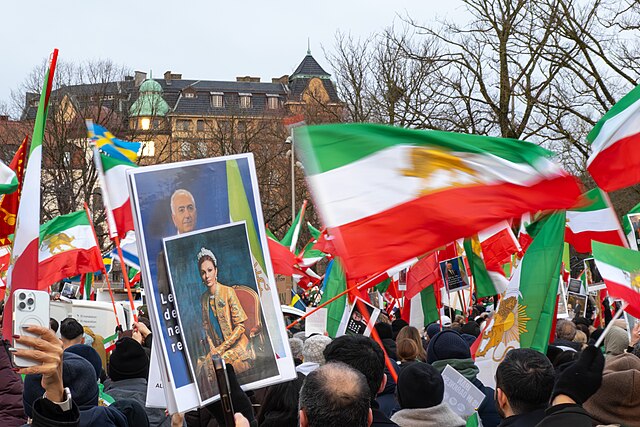
Subject to a tyrannical and violent crackdown against protests with the death count currently estimated to sit at over 10,000, the people of Iran are facing internet blackouts, communication restrictions and external intervention that threatens the people’s demands for freedom of speech, expression, and movement.
Whilst a deeply complex issue; this article will endeavour to explain some of the events that sparked protests in Iran, outline how the Iranian, and foreign governments like the US, UK and Israel are responding to these protests and finally, offer firsthand accounts of people on the ground in Iran trying to document events despite the nationwide blackout.
Firstly, it is important to briefly establish the history of 20th century Iran. As with most things, a history of American and British intervention can be attributed to some of the unrest in Iran today. Western intervention can be traced back to 1953 when the CIA and MI6 overthrew the democratically elected Prime Minister Mohammad Mossadegh.
The left-leaning leader was not only secular but intended on nationalising the country’s oil reserves which had previously been controlled by the British. The coup reinstated Mohammad Reza Pahlavi who would rule until the Islamic revolution in 1979. Ultimately, this 1979 coup was a breakdown of state authority by a coalition of: Islamic extremists, soviet-aligned communist, and Marxist groups. Later, former leftist allies would be eliminated and killed by the religious extremists to consolidate the Islamic Revolution for what it is known for today.
In the 21st century, the US has“imposed restrictions on activities with Iran under various legal authorities since 1979”, with most recently including “Sweeping Sanctions on Iran’s Energy Exports” (October 9th 2025), “Sanctions on Iran’s Oil Network to Further Impose Maximum Pressure on Iran” (August 21st, 2025), and a slew of executive orders imposing more sanctions on the country (2019, 2018, and 2016).
This history of sanctions has coincided with some particularly volatile years of political unrest in Iran. The death of Jina Mahsa Amini in police custody in 2022 sparked “protests unlike any country had seen before” and led to a “disproportionate use of lethal force” that killed over 500 people” and led to the arrests of over 19,000. The protests were sparked after Amini refused to abide by the mandatory hijab laws and later died in police custody after being subject to state sanctioned beatings and violence. Additionally, the twelve-day war with Israel this past summer contributed to the further destabilisation of the nation after Israel launched a surprise attack on Iranian nuclear facilities.
Ultimately, this multitude of factors has catalysed the current protests in Iran with the final straw for the nation being increased economic instability. This is partially due to years of US sanctions, and partly due to the mismanagement of Iran’s economy by oppressive dictator Ali Khamenei through funding resistance groups and terror in other nations. Now, Iranian shopkeepers are taking to the streets in Tehran in protest at the “sharp fall in value” of the rial (Iranian currency) against the US dollar in the open market. Entering 2026, inflation in Iran has risen to 40% and has caused everyday items like cooking oil and meat to be priced extortionately high for civilians.
Though these protests originally began as demonstrations about economic conditions, they have since widened to include grievances about hijab laws, women’s liberation, and demands of the end of the dictatorship and the return of Reza Pahavi to power. One Iranian quoted to the Guardian, “For years now, we have slowly but surely made significant changes to our lifestyles because of this corrupt government. This was the last nail in the coffin. We wanted this regime gone and now there’s no way this regime will continue.”
Interestingly however, the imperial American state has vowed to intervene in these protests, not on the side of the government but rather on the side of the Iranian people. Donald Trump, who has increased fascistic methods of control in his own country and has previously ordered the national guard to intervene in American protests, has “flirted with the idea of striking Iran”, in response to the dictatorship.
Fundamentally, this is a bizarre move and should not be misconstrued as American benevolence for a struggling people but rather another effort to seize political control of a nation already wracked with instability.
Ultimately, how should we as British leftists be responding to and supporting the people of Iran. Firstly, it is important to recognise and advocate for the Iranian people who are protesting and suffering under an oppressive, theocratic regime that came into power through violent force. The Iranian people deserve liberation, freedom and independence from domestic and foreign tyranny.
Secondly, we should remain opposed to western intervention in Iran. After Iraq, Afghanistan, Libya and a myriad of other countries, it would be historically inept to believe Western powers like the US and UK have the best interests of the Iranian people at heart. Ultimately, Iranian suffering began with Western intervention; it will not be ended by Western intervention.
Power to the Iranian people, power to the working class!